
Current Situation
As Ann Arbor continues to grow, the city is faced with pressing issues regarding housing availability and costs, transit, and sustainability. Housing costs continue to rise, pricing out many middle-income workers that work in Ann Arbor but cannot afford to live in Ann Arbor. This results in unsustainably long commutes for workers, exacerbated by poor connectivity and transit options.
Degradation of Natural Features

Remove invasive species to restore existing park land, trails, and viewscapes
Increase funding to preserve and enhance existing park land, paths, and trails
Housing Shortage

$600,000
Average home price within the Ann Arbor Public School District
$350,000
Top end of price range affordable to working families earning up to $120,000/year
Lack of Comprehensive Plan

Planning and development along the river corridor is generally done parcel-by-parcel, project-by-project, entity-by-entity, without a comprehensive vision or regard to what is planned elsewhere within the corridor. The City and University show little collaboration across their respective development plans, including very little involving the river.
Our Solutions
Start with the Riverfront
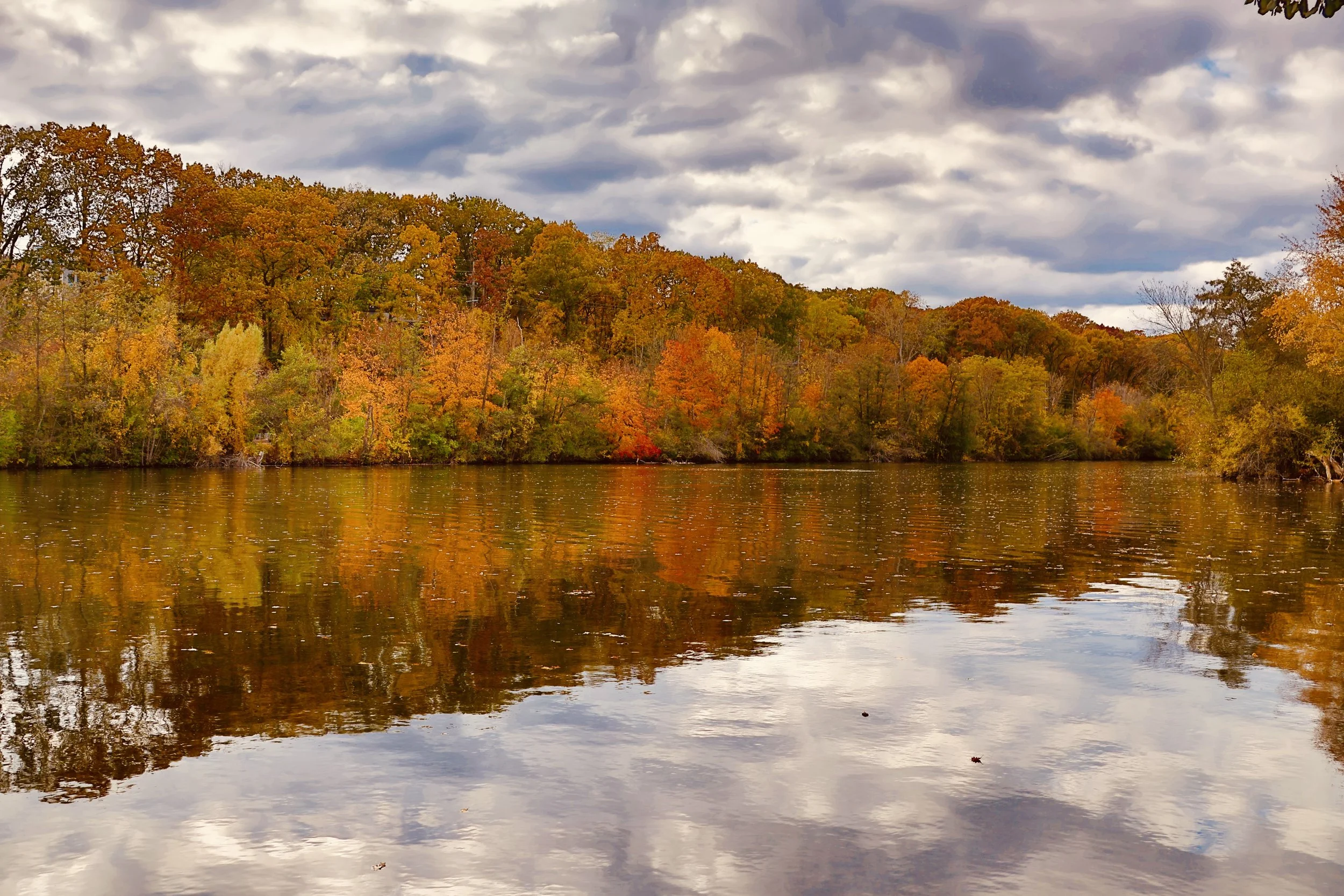
Focus on the Huron River to create a world-class riverfront experience akin to prestigious cities worldwide. Start by restoring and enhancing access to existing park land. Embrace the natural beauty of the Huron River and enhance parkland to make it accessible to all.
Create Middle-Income Housing
Ensure that anyone who works in Ann Arbor is able to live in Ann Arbor. At least 25% of every development should offer middle-income housing, with up to 75% market-rate to help underwrite the affordable. In order to create net worth, offer for sale options with Ann Arbor’s significant appreciation so that all the occupants can own, not just rent.
Add Residential Density
Add impactful residential density throughout the River Corridor, Fuller Road, and all Transit Oriented Development (TOD) corridors, such as Plymouth Road. Ann Arbor needs to become a city of 200,000 residents to keep up with the growth of U-M, so simply building houses and duplexes won’t accommodate.
Improve Connectivity & Transit
Transform Ann Arbor into a walking, biking, and mass-transit community. This includes a new, integrated system with trains, bus lines, and expanded pedestrian pathways and trails to connect downtown with Central, Medical, and North Campuses. Start by connecting the five river oxbows with new pedestrian pathways and bridges.
Creative Placemaking
The creation of new 15-minute neighborhoods requires places for people to eat, drink, shop, play, relax, entertain, and more. Turn these new developments into places for everyone in town to gather, whether it be at a new restaurant, locally-owned shops, a movie in the park, a summer festival, and more!
Ann Arbor Community Land Trust
The Ann Arbor Community Land Trust, founded in 2024 by EA2, serves as a nonprofit developer and community-led steward of the homes under its care. The focus of A2CLT is homeownership, sustainability, affordability, and strong community ties.